
Champions League 2026: Quarterfinals, Format, and Favorites
A lot of club tournaments matter, but the Champions League still feels different. The stakes are higher, the margins are thinner, and one mistake can change a season.
That tension is why fans all over the world keep coming back. As of April 2026, the tournament has reached the quarterfinal stage, which makes this the right moment to step back and look at how it works, what has happened so far, and which teams look ready for Budapest.
How the Champions League works, from the league phase to the final
The modern Champions League asks clubs to survive two different tests. First, they need consistency. Then, they need nerve.
What changed in the modern format and why it matters
The biggest shift is the league phase. Instead of small groups, 36 teams now play eight matches against eight different opponents. That creates more variety and, for fans, more heavyweight matchups earlier in the season.
After those eight games, the top eight teams move straight into the round of 16. Teams that finish from ninth to 24th still have a path, but they must survive an extra playoff round. Everyone below that line is out.
In simple terms, clubs can no longer hide in a soft group or recover easily from a slow start. Every point matters because the table is crowded and the difference between eighth and ninth is huge.
That format also gives the winter schedule more bite. A packed night like the January 28 match slate shows how many results can shift the table at once.
Why knockout soccer makes every mistake feel bigger
Once the knockout rounds begin, the tone changes. League form helps, but it doesn't protect anyone.
Most ties are played over two legs, one home match and one away match. The team with the better aggregate score advances. If the score stays level, the tie goes to extra time and penalties.
That setup makes small details feel huge. A sloppy pass in the 88th minute can matter as much as a brilliant goal. A club might dominate one leg, then struggle badly in a hostile away ground four days later.
In the Champions League, control can vanish in a few minutes, and that's why the tournament feels so intense.
Squad depth also matters more than fans often expect. Teams still fight for domestic trophies at the same time, so rotation, travel, and fitness shape the knockout picture almost as much as tactics do.
Where the 2025-26 Champions League stands right now
The tournament is now in the quarterfinal stage, and the first ball hasn't been kicked in this round yet. First legs are set for April 7 and 8. Second legs follow on April 14 and 15. Then come the semifinals on April 28 and 29, with return games on May 5 and 6. The final is scheduled for May 30, 2026, at Puskás Aréna in Budapest.
Fans who want the immediate timing for the opening ties can check the April 7 quarterfinal schedule, which lists the first two matchups for the week.
The quarterfinal matchups that will shape the title race
Each tie has its own pull. Some bring star power. Others bring style clashes. One or two could turn on pure nerve.
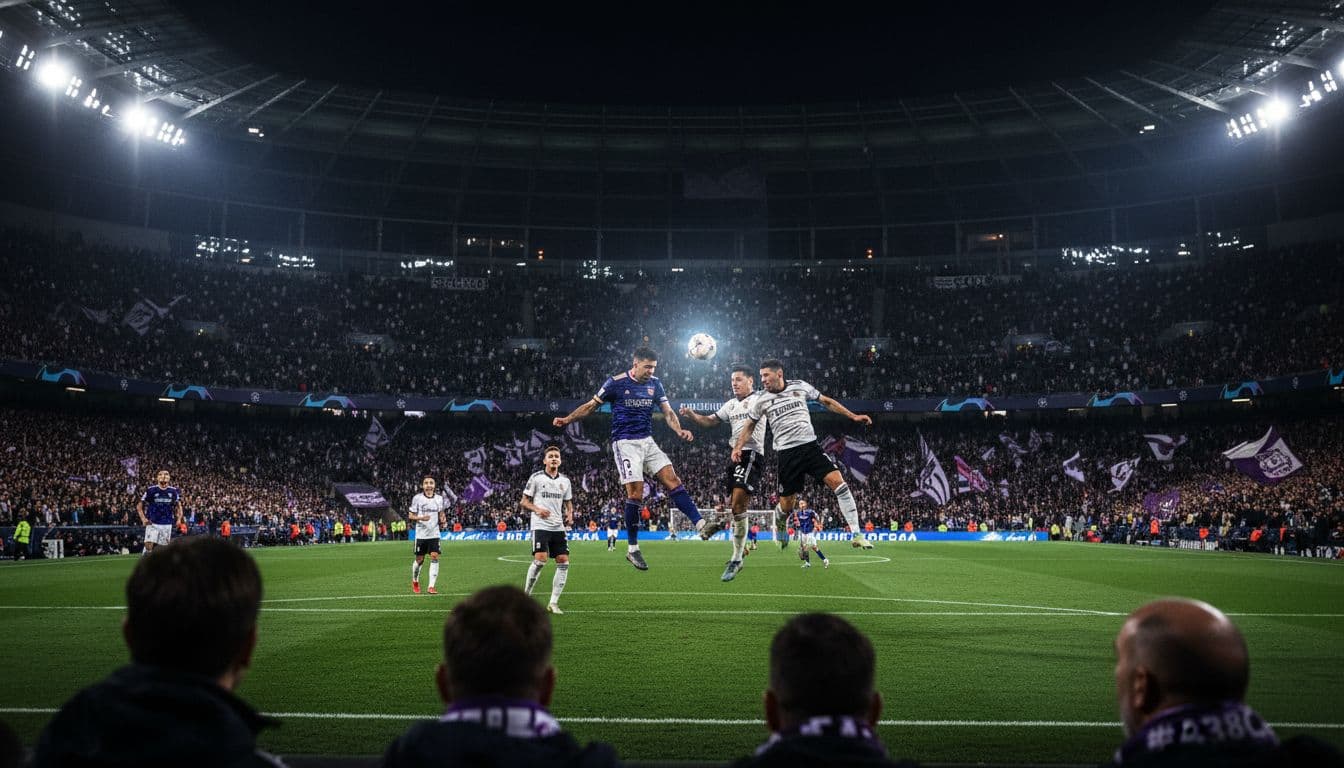
Here is the quarterfinal bracket at a glance:
| Tie | First leg | Second leg | Why it stands out |
|---|---|---|---|
| Sporting CP vs Arsenal | April 7 | April 15 | Arsenal's control against Sporting's energy |
| Real Madrid vs Bayern Munich | April 7 | April 15 | European royalty, loaded with stars |
| Barcelona vs Atletico Madrid | April 8 | April 14 | A fierce Spanish matchup with sharp tactical contrast |
| Paris Saint-Germain vs Liverpool | April 8 | April 14 | Pace, pressure, and elite attackers on both sides |
Real Madrid against Bayern is the glamour tie. It feels like old Champions League history meeting a fresh chapter. Barcelona against Atletico should be tighter and more tactical. PSG against Liverpool could be the wildest watch because both sides can punish space fast.
Sporting against Arsenal may get less hype in some markets, but it shouldn't be dismissed. Arsenal have looked strong, yet Sporting are the sort of team that can turn one home leg into chaos.
The biggest results and surprises so far
The road to this point has already changed the shape of the season. Manchester City are out. Chelsea are out. That alone gives this bracket a different feel.
Real Madrid knocked out Manchester City again, this time by a 5 to 1 aggregate score. That is no small headline. When Madrid meet a major rival in Europe, they keep finding answers.
PSG, the defending champions, also sent a message with an 8 to 2 aggregate win over Chelsea. Liverpool handled Galatasaray well over two legs, while Bayern tore through Atalanta. A quick look at the March 10 round-of-16 results shows how dominant some of those second-leg performances were.
There have been smaller shocks too. Sporting ended Bodø/Glimt's impressive run, and a few costly goalkeeping errors helped swing big ties. That's classic Champions League stuff. The field still looks elite, but the path has already bent in unexpected ways.
The teams and players driving this season's story
Quarterfinals aren't only about names. They're about timing. A team can look ordinary in January and terrifying in April.
Why Real Madrid, PSG, Arsenal, and Barcelona look dangerous
Real Madrid remain the team no one wants to meet late in this tournament. Their big-game history doesn't win matches by itself, but it changes how every opponent feels. When pressure rises, Madrid rarely look surprised by it.
PSG deserve respect because they're the defending champions and have reached this stage in strong form. They blew past Chelsea and still carry the kind of pace that can wreck a tie in 15 minutes.
Arsenal have earned their place in the contender group. They have defended well, they've looked organized, and they've shown they can control long stretches of a game. Their winter level also stood out in the January 20 results roundup, which reflected how steady they were during the league phase.
Barcelona belong in the same conversation because they can score in bursts. If they find rhythm early in a tie, they can make even strong opponents chase the game.
The star names to watch, led by Kylian Mbappe
The top scorer race tells part of the story. Kylian Mbappe leads the competition with 13 goals for Real Madrid, and that number matters because close knockout ties often turn on one world-class finish.
Harry Kane is right behind the leaders, although reports differ slightly on his total. Either way, Bayern know they can lean on him when half-chances appear in the box. Julian Alvarez has given Atletico Madrid a sharp edge, while Khvicha Kvaratskhelia has been a major part of PSG's attacking threat.
Even players from eliminated teams have shaped the season. Anthony Gordon's scoring run for Newcastle was one of the more surprising storylines, and it showed how open this campaign has been from the start. The January 21 scoreline roundup captures some of that midseason unpredictability.
What fans should watch as the road to Budapest gets shorter
The smart way to watch the quarterfinals isn't only to track goals. Watch the parts of the game that create them.
Small moments that often decide Champions League ties
Finishing is the obvious one. A team might get four good chances across two legs and score only once. That waste can end a season.
Goalkeeping is close behind. One great save can keep a tie alive. One poor decision can turn a calm night into panic. Set pieces also carry extra weight because tight matches often stay level for long stretches.
Then there is discipline. A reckless yellow card in the first leg can remove a key player from the second. Late substitutions matter too. Fresh legs against tired defenders often decide the final 20 minutes.
What could define the final weeks of this season
Squad health may shape everything. By late April, many clubs are juggling domestic pressure and Champions League travel at the same time.
Away performances will matter as well. Teams that stay calm in hostile stadiums usually go furthest. Star form could tilt the bracket, but composure may matter even more. The clubs that stay patient, manage transitions, and protect leads are usually the ones still standing in May.
IPTV Streaming Service
For fans who don't want to miss a midweek kickoff, a reliable viewing setup matters almost as much as the match itself. AI-IPTV presents itself as an IPTV streaming service for live sports, movies, and TV series, with features such as catch-up TV, sports replays, and free IPTV apps for different devices.
According to its site, it offers broad channel access, daily EPG updates, and support for phones, tablets, Android TV boxes, and streaming sticks. That's the kind of flexibility many Champions League fans want, especially when quarterfinal nights split matches across different days and devices.
The main point is simple: if you're following the run to Budapest, make sure your stream setup is sorted before kickoff. The worst time to test an app is five minutes before Mbappe gets his first chance.
The race to Budapest already feels sharper because so many big names are still alive, yet recent upsets have opened the door wider than expected. Real Madrid's knockout strength, PSG's title defense, Arsenal's rise, and Barcelona's attacking threat give this season a real edge.
Now the quarterfinals have to answer the hard question. Which team can stay calm when the pressure spikes?
That's what should make the next few weeks so good. The clubs with the best players may go far, but the club that handles the small moments best will have the last walk out in Budapest.